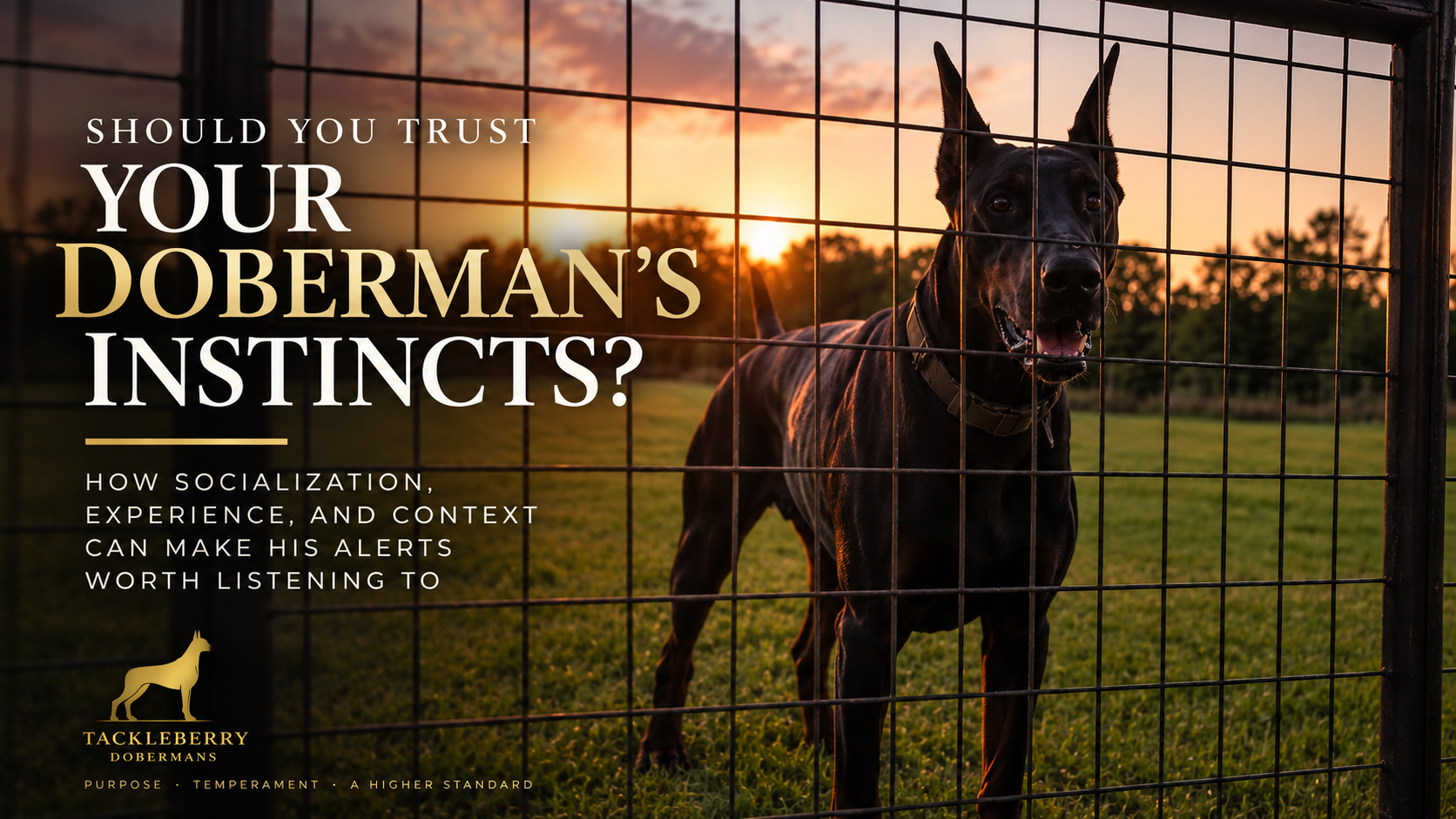

Should You Trust Your Doberman’s Instincts?
ALERT: What Your Doberman Knows Depends on What You’ve Taught Him About the World
Your Doberman suddenly stops.
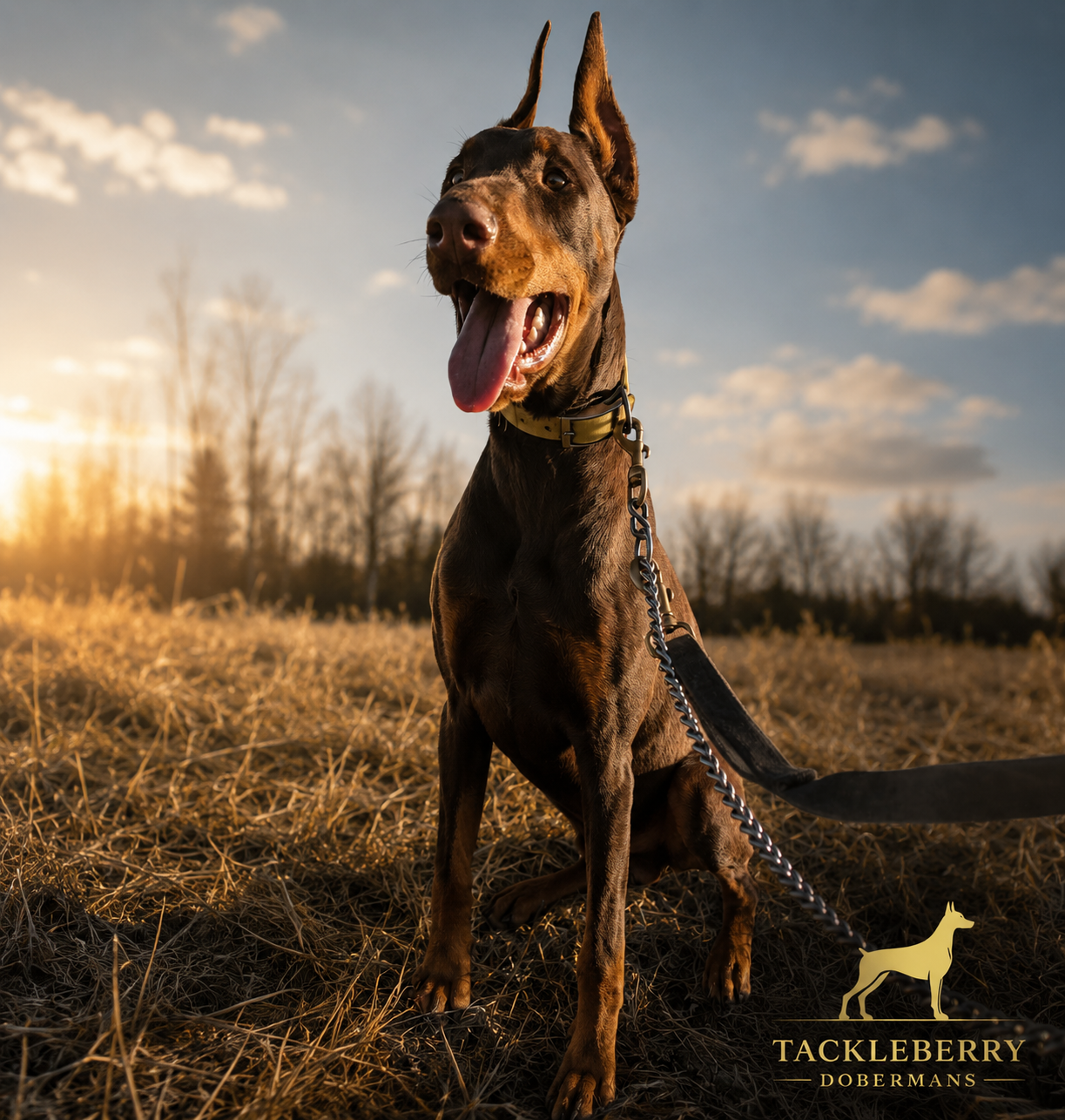
His posture changes. His attention fixes on someone approaching. Maybe he moves closer to you. Maybe you feel the slightest tension travel through the leash.
You haven't seen anything obviously wrong.
But your Doberman has.
Or has he?
If you own a Doberman long enough, there's a good chance you'll eventually experience a moment that makes you wonder:
Does my Doberman know something I don't?
People love to tell stories about dogs sensing danger, recognizing bad people, or instinctively knowing when something isn't right. And with a breed developed in part for personal protection, it's tempting to place even greater faith in those instincts.
But should you?
The answer may have less to do with how strong your Doberman's instincts are—and considerably more to do with what you've taught him about the world.
Because instinct without context can be remarkably difficult to interpret.
Further Reading: Are Dobermans hard to train? 4 Crucial Considerations
Have we met?
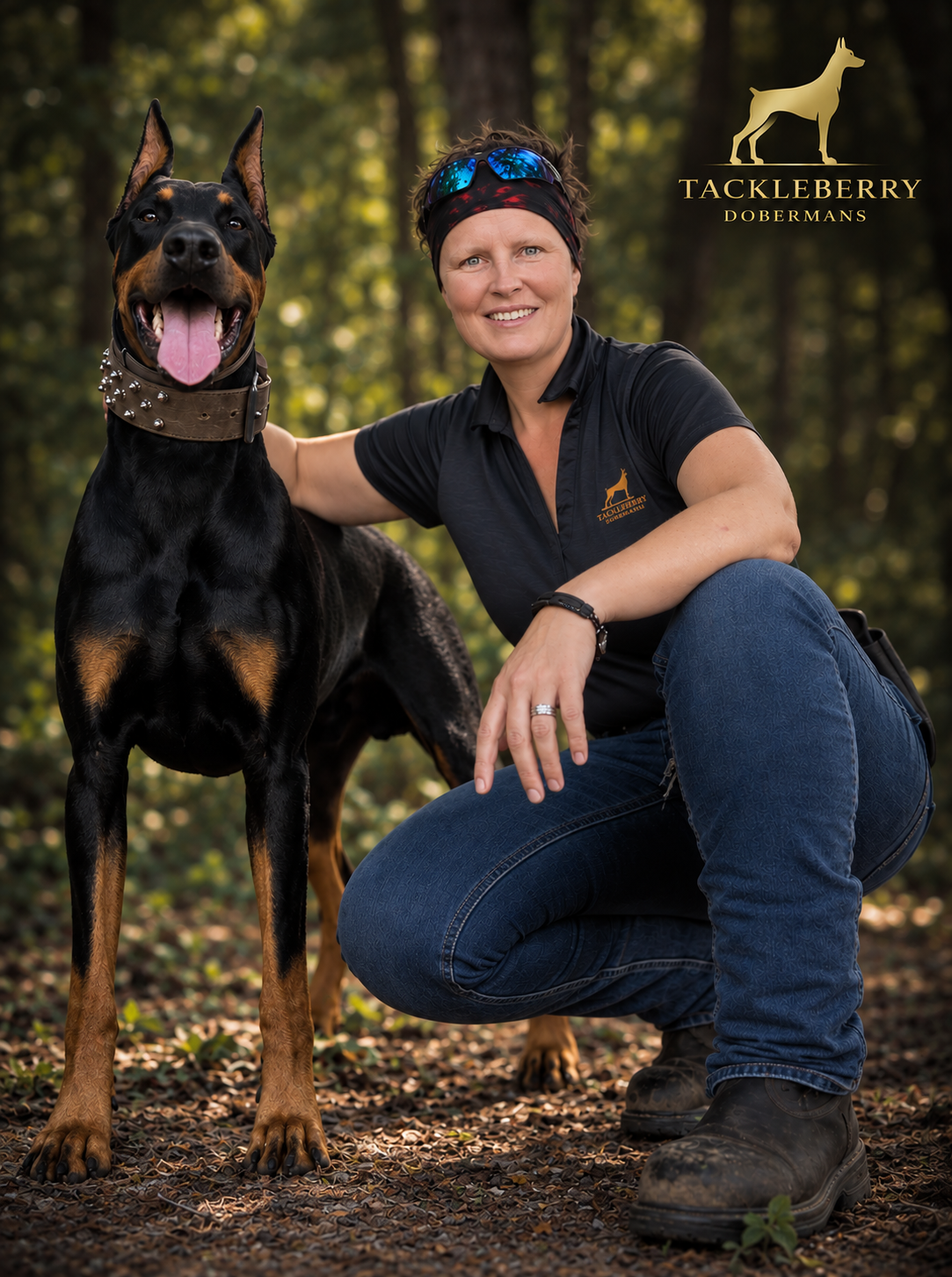
Hello, I'm Amy Arthur, founder of the Tackleberry Alliance.
My work within the K9 world is built around a simple belief: exceptional dogs deserve equally capable people beside them. Through education, development, and meaningful standards of achievement, I create practical frameworks that help you better understand the dog you're working with and discover what you're capable of accomplishing together.
Through my breeding program, the Tackleberry Alliance, and the Tackleberry Academy, you'll find the guidance, resources, and opportunities to take that partnership farther.
You bring the ambition. I'll help you build the path forward.
Imagine Two Dobermans
Imagine you're standing outside a store with your Doberman when an unfamiliar man begins walking toward you.
Your dog's body changes.
He becomes still.
His attention locks onto the approaching man.
As the distance closes, your Doberman moves nearer to you and gives a quiet, low growl.
Now imagine another Doberman, with another owner, does exactly the same thing.
Same approaching stranger.
Same change in posture.
Same growl.
Same apparent warning.
From the outside, these dogs appear to be communicating the same thing.
But there's something you can't see in that moment:
Their histories are completely different.
The first Doberman has had limited exposure to unfamiliar people and environments. Strange men routinely make him uncomfortable. Someone walking directly toward him creates pressure. Unusual clothing makes him suspicious. Sudden movements startle him.
His world is filled with things he hasn't yet learned to understand.
So when he growls at the approaching stranger, his behavior matters—but what exactly is he telling you?
There's a dangerous person approaching?
Or:
I'm uncomfortable because I don't understand what's happening?
Now consider the second Doberman.
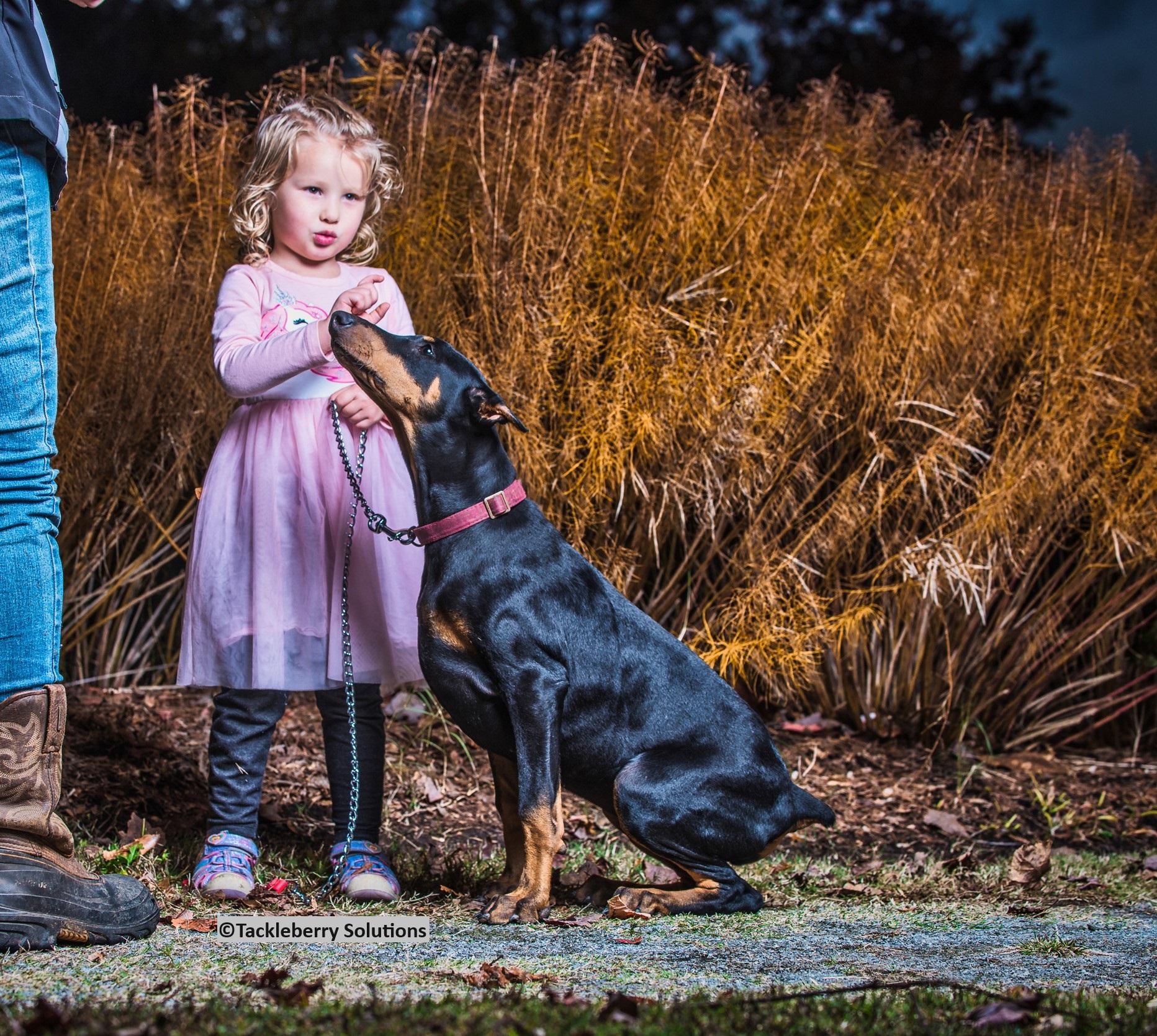
You've spent months deliberately showing him the world.
He has walked through stores and busy public spaces. He's watched strangers pass closely. He's encountered men, women and children. He's seen hats, uniforms, strange objects, loud equipment and unpredictable movement. He's watched delivery drivers approach the house and guests walk through the door.
And through all of it, you've helped him learn to remain confident, stable and aware.
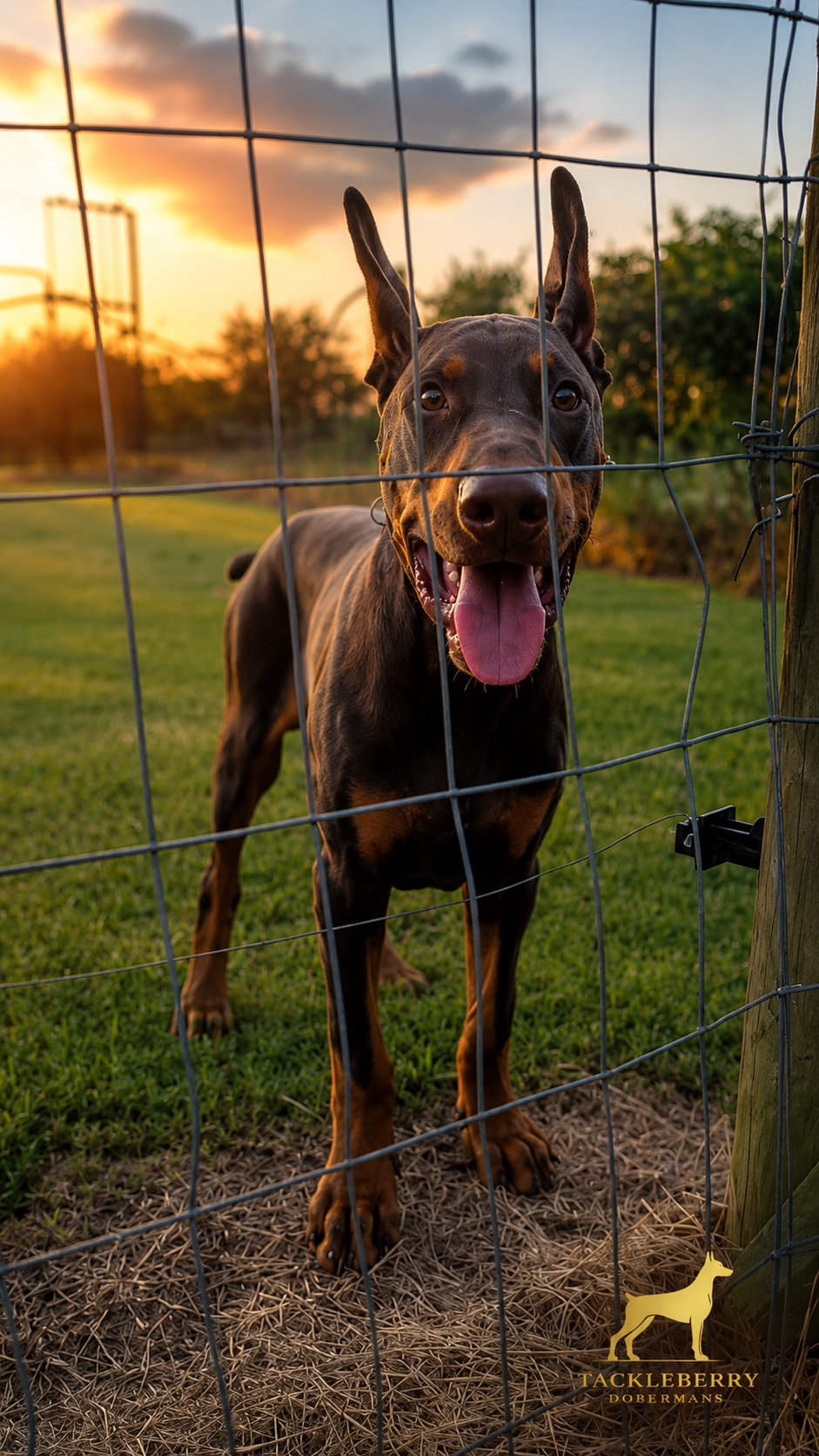
He doesn't need to greet everyone.
He doesn't need to love everyone.
He simply understands that ordinary life is ordinary.
Then one day, something changes.
His posture shifts.
His attention becomes unusually focused.
His behavior toward a particular situation is noticeably different from the dog you normally know.
Does that prove there's a threat?
No.
But now you have information worth considering.
The behavior may look identical to the first Doberman's response.
The context behind it is completely different.
Further Reading: Scam Breeders alert: Ensuring your Doberman breeder is legit
Should You Trust Your Doberman?
Yes—and no.
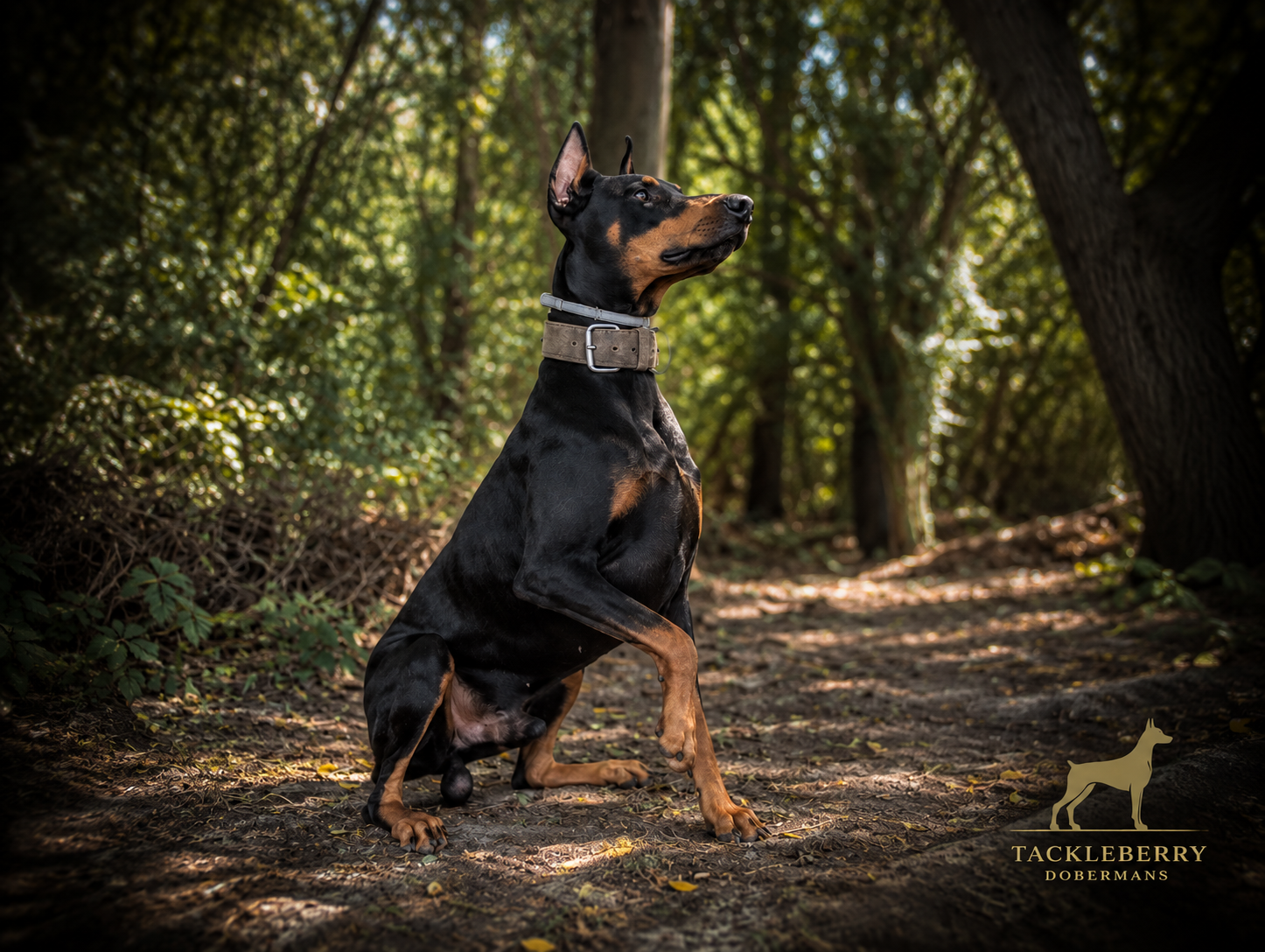
Your Doberman experiences the world through senses you don't possess in the same way. He may hear something you haven't heard. Smell something you can't smell. Notice subtle movement, posture, tension, proximity or environmental changes before you've consciously registered them.
And instinct influences what he does with all of that information.
But your Doberman isn't a lie detector.
He isn't a judge.
And he doesn't possess a supernatural ability to identify whether another human being has good or bad intentions.
Fear can look like suspicion.
Insecurity can look like vigilance.
Excitement can look like alertness.
Reactivity can look remarkably impressive when it's mistaken for protection.
That's why the question shouldn't simply be:
“Do I trust my Doberman's instincts?”
A better question is:
“Do I understand my Doberman well enough to recognize when his behavior means something has changed?”
That's a very different skill.
Further Reading: What is the best breed for personal protection?
The Protection-Dog Socialization Controversy
This is where the subject becomes particularly interesting.
Within some areas of protection-dog development, you'll encounter the belief that too much socialization can work against the dog's eventual purpose.
The reasoning isn't difficult to understand.
If you want a dog to remain naturally suspicious of unfamiliar people, why spend puppyhood teaching him that strangers are harmless?
If you want protective instincts, why encourage friendliness?
Depending on the type of working dog being developed and the job expected of that dog, trainers may intentionally manage social interaction very differently.
But that isn't the philosophy behind the DAD Standard.
Whether you're developing toward the DAD Family Division or DAD Professional Division, your Doberman still has to exist successfully in the world in which you expect him to function.
And that leads to a question I think is worth asking:
What if socialization doesn't weaken the alert—but makes the alert worth listening to?
Further Reading: Nightmares? 3 Top Ways a Doberman Can Help
Socialization Isn't About Teaching Your Doberman That Everyone Is Safe
This is where the word socialization itself can create confusion.
Socialization doesn't have to mean encouraging every stranger to pet your puppy.
It doesn't mean teaching your Doberman to enthusiastically greet everyone he encounters.
And it certainly doesn't mean teaching him that every person and every situation is safe.
The objective is much more useful than that.
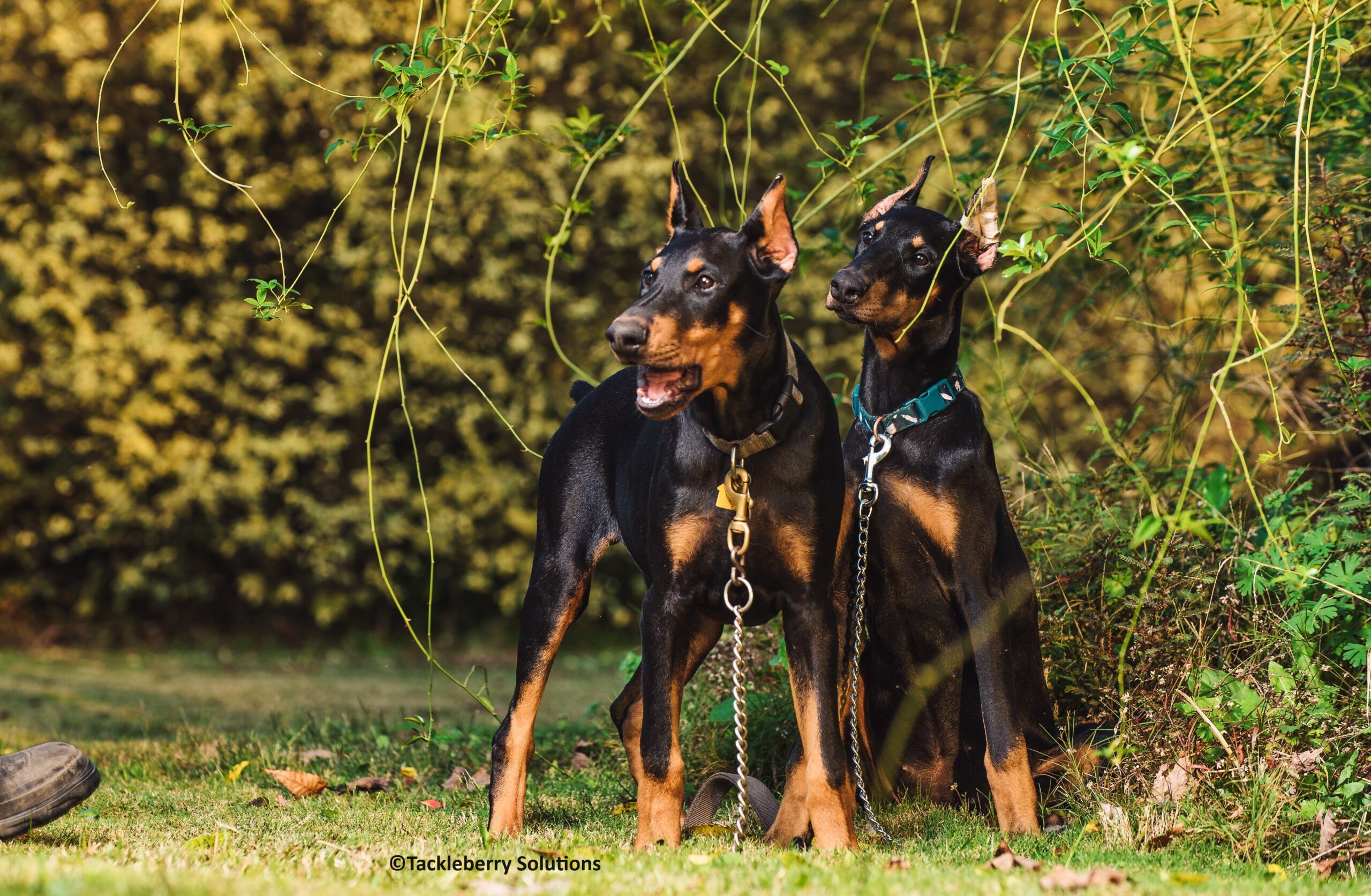
Socialization should help teach your Doberman what normal looks like.
A child running past him.
A man wearing a hat.
A delivery truck backing into the driveway.
Someone carrying a large box.
A stranger speaking loudly.
Shopping carts rattling.
People approaching you.
Someone walking behind you.
A visitor entering the house.
A crowded environment.
A quiet environment.
Something falling unexpectedly.
The world is complicated.
If your Doberman has never experienced much of it, ordinary things can produce extraordinary reactions.
And that makes his behavior harder for you to interpret.
You don't strengthen a Doberman's judgment by keeping him from the world he's expected to judge.
You give him experience.
You allow him to discover that strange doesn't automatically mean dangerous.
You help him recover when something surprises him.
You teach him that he can encounter something unfamiliar, investigate it appropriately, and move on.
You're not trying to remove his instincts.
You're giving those instincts context.
Further Reading: How to find the best Doberman Pinschers in America
If Everything Is Suspicious, Suspicion Doesn't Tell You Very Much
Imagine your Doberman barks whenever someone walks past the house.
He barks at the delivery driver.
He barks at your neighbor.
He barks when your friend arrives.
He barks when someone shuts a car door.
He barks at the person jogging down the road.
Then, one evening, someone actually approaches your property with intentions that concern you.
Your Doberman barks.
What changed?
From your perspective, perhaps very little.
Your dog has already taught you that barking means:
Someone exists.
That's information—but it isn't particularly refined information.
Now imagine your normally stable Doberman notices people walking past the property every day without concern.
He knows the neighbor.
He's familiar with delivery vehicles.
He has learned the rhythms of his environment.
Then one evening his behavior changes.
He becomes intensely focused on something outside.
Perhaps he positions himself differently.
Perhaps he gives a bark you recognize as unusual.
Perhaps he simply refuses to dismiss something he would normally ignore.
Again, that doesn't prove danger.
But you're probably going to look.
And that may be exactly what you needed from him.
Further Reading: 5 Ways A Protection Dog Will Top A Guard Dog Every Time
Your Doberman Doesn't Have to Make the Decision
This is where people can accidentally place too much responsibility on the dog.
Your Doberman doesn't need to decide whether someone is a criminal.
He doesn't need to determine whether someone's intentions justify a response.
And you shouldn't blindly escalate a situation simply because your dog reacts.
You make the decision.
Your Doberman contributes information.
That's an important distinction.
If his behavior suddenly changes, you can create distance.
You can look around.
You can reconsider where you're standing.
You can leave.
You can call someone.
You can decide there's absolutely nothing wrong and continue with your day.
The alert hasn't failed simply because it turned out there was no danger.
Its job was to make you aware that something deserved your attention.
Your Doberman doesn't need to know that someone is dangerous to tell you something has changed.
He only needs to give you a reason to look up.
Further Reading: Are Protection Dogs A Liability?
This Is ALERT
This is the second principle behind the DAD Doberman: Deter. Alert. Delay.
And ALERT is about considerably more than teaching a Doberman to bark.
DETER begins before the confrontation. Your Doberman's presence alone may influence whether someone chooses to approach you at all.
But deterrence cannot guarantee that every threat will disappear.
So the next advantage is awareness.
ALERT.
Your Doberman notices.
Your Doberman communicates.
You interpret.
And because you've invested in understanding your dog—his normal behavior, confidence, fears, experiences, body language and patterns—you have context for deciding whether that communication deserves greater attention.
That's why upbringing, confidence, environmental exposure, and the relationship you build with your Doberman makes a big difference.
The objective isn't a dog who tells you that everything is dangerous.
It's a dog whose communication becomes more meaningful because everything isn't.

Further Reading: The Worst Alpha Dog Myth Debunked in 8 Minutes
Instinct Is Only Part of the Equation
Likewise, many people often ask, "Will my Doberman protect me?" Foundationally, a Doberman's natural instincts are just one of the characteristics that make the breed extraordinary.
But instinct alone isn't the finished product.
What you expose your Doberman to, what you teach him, how you respond when he's uncertain, whether you help him develop confidence or allow fear to become his default response, and whether you've learned to recognize the difference is important.
That's one reason the DAD philosophy places such importance on developing the dog and educating the person living with him.
Because the more accurately you understand what's normal for your Doberman, the more meaningful it becomes when something isn't.
You don't need a dog who believes danger is everywhere.
You need a Doberman capable of living confidently in the real world—and a relationship strong enough that when he tells you something has changed, you know him well enough to listen.
That is the value of ALERT.
Not noise for the sake of noise.
Not suspicion for the sake of appearing protective.
Not blindly trusting every reaction.
Awareness. Communication. Context.
Your Doberman brings instincts and senses to the partnership that you don't have.
You bring judgment and responsibility that your Doberman cannot.
Together, those things can give you something extraordinarily valuable:
the opportunity to know sooner.
And knowing sooner can change everything.
If you'd like to learn more about the deeper dynamics of building a DAD Doberman, check out the Tackleberry Academy and choose your training division.