
DETER: The Protection That Happens Before Anything Happens
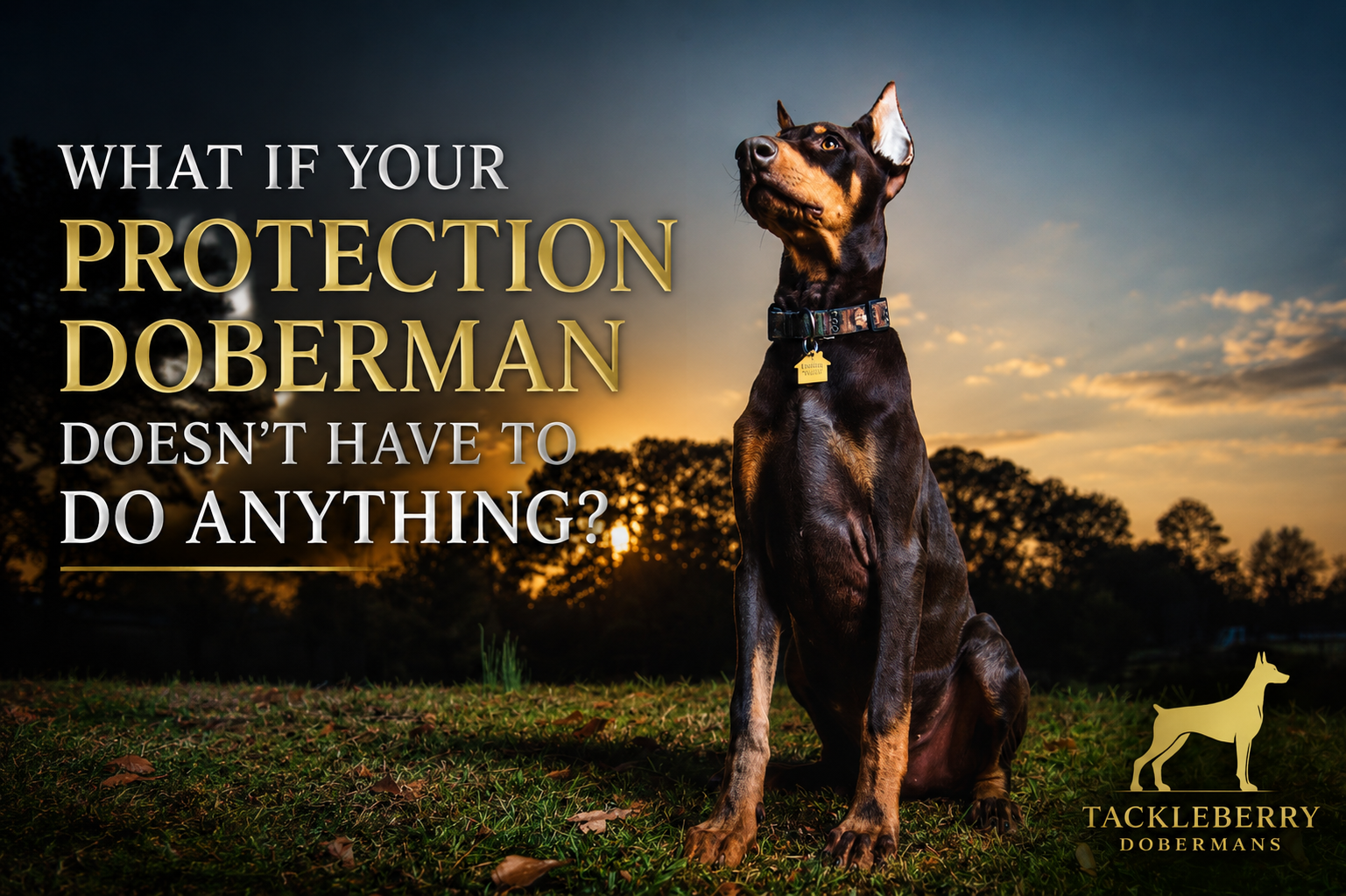
What if the best protection your Doberman provides requires him to do nothing at all?
No barking. No lunging. No physical confrontation.
Someone notices the dog, evaluates the situation, and decides you’re not worth approaching.
Nothing happens.
It’s easy to look at that scenario and conclude that your Doberman didn’t protect you—because he never had to act.
But what if nothing happening was the protection?
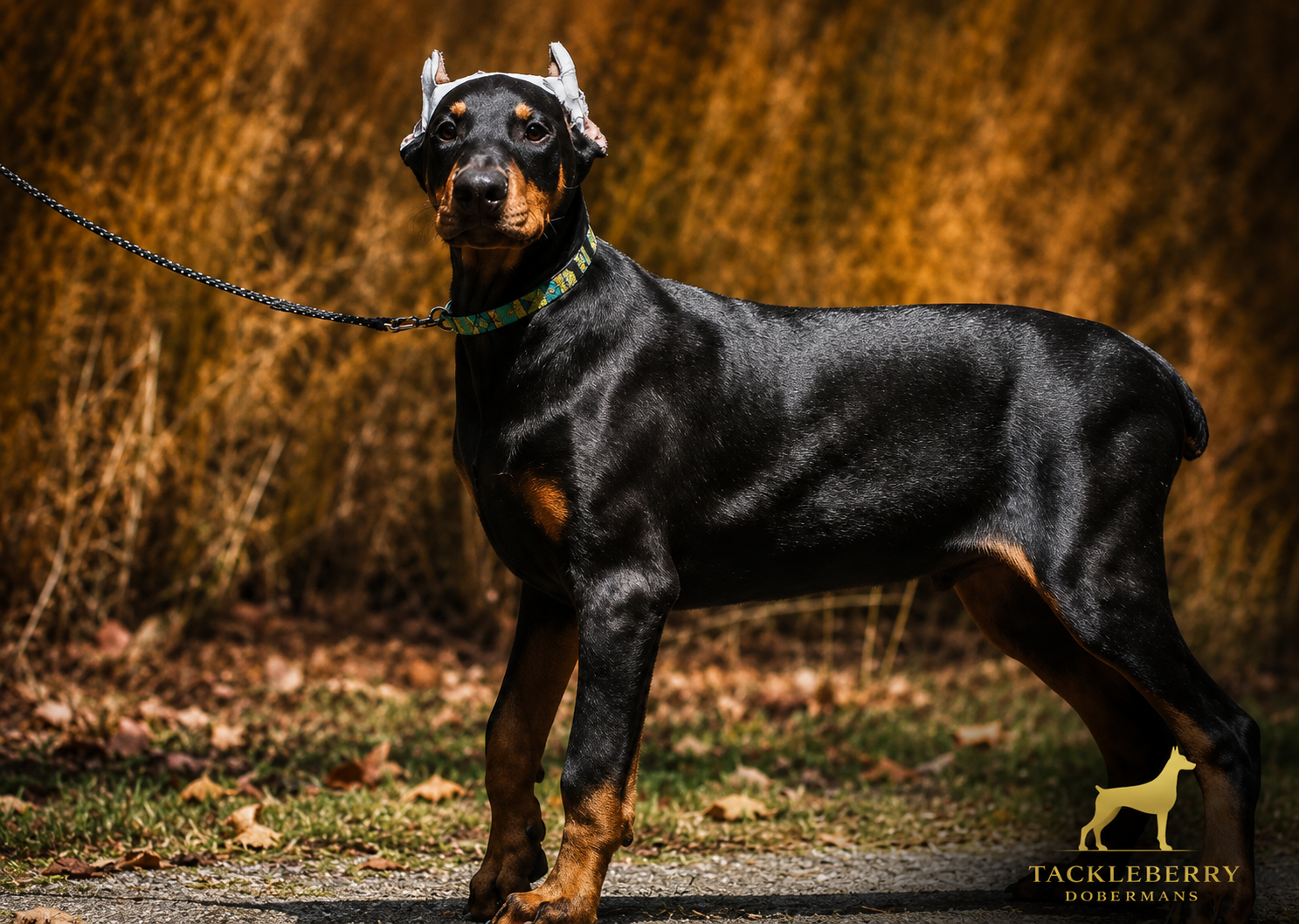
When people think about a protection Doberman, they tend to imagine action. A dog barking at an intruder. Standing between an owner and a threat. Or, in a professionally developed protection dog, physically engaging when necessary.
Those abilities certainly have their place.
But they begin the story too late.
Protection doesn’t always begin when someone decides to threaten you. Sometimes it begins while that person is still deciding whether you’re someone they want to approach in the first place.
And that changes the way we measure whether a Doberman has done his job.
Have we met?
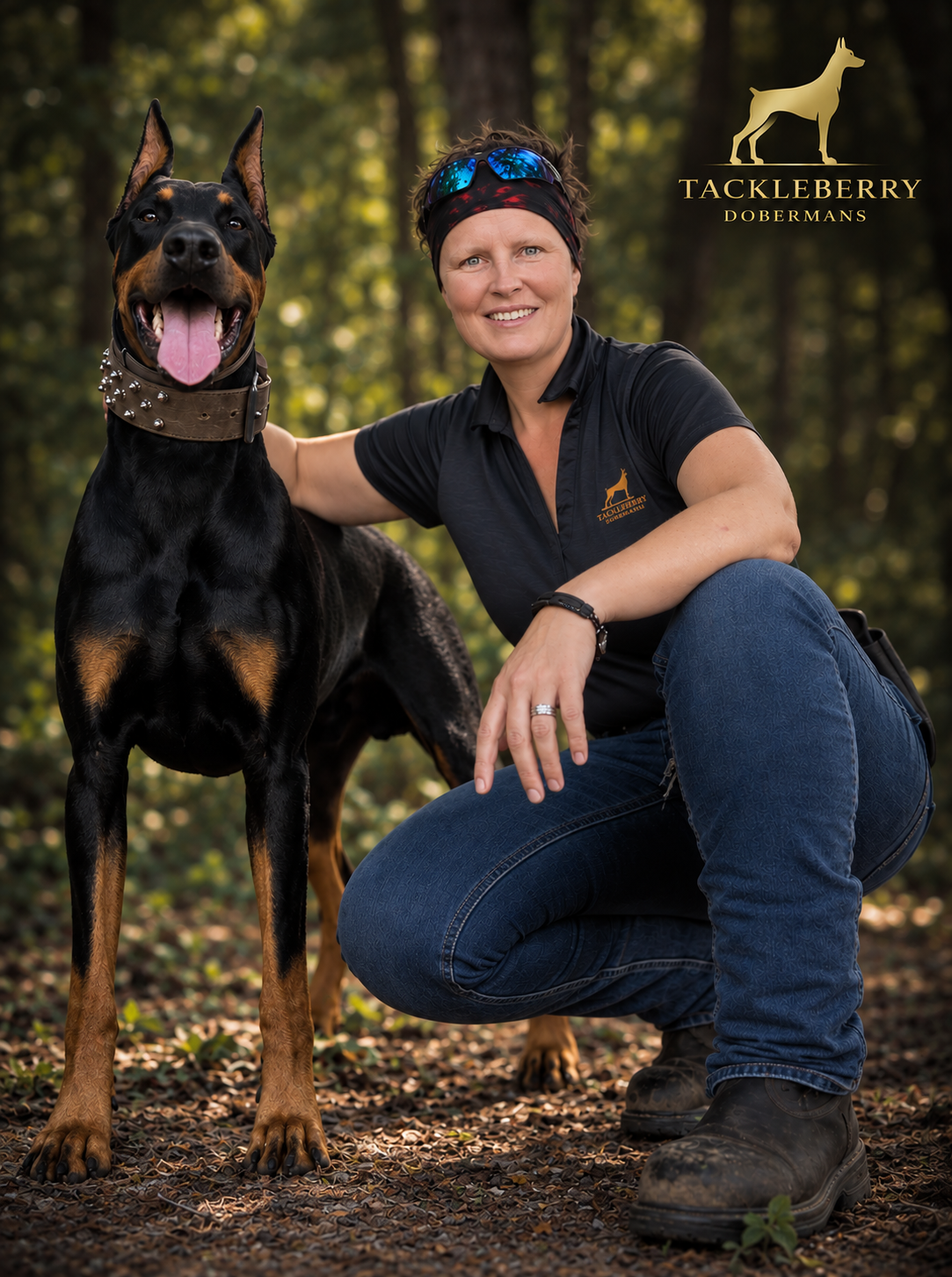
Hello, I'm Amy Arthur, founder of the Tackleberry Alliance.
My work within the K9 world is built around a simple belief: exceptional dogs deserve equally capable people beside them. Through education, development, and meaningful standards of achievement, I create practical frameworks that help you better understand the dog you're working with and discover what you're capable of accomplishing together.
Through my breeding program, the Tackleberry Alliance, and the Tackleberry Academy, you'll find the guidance, resources, and opportunities to take that partnership farther.
You bring the ambition. I'll help you build the path forward.
Protection Isn’t Always Something Your Doberman Does
Imagine two people walking through the same parking lot.
One is walking alone.
Beside the other walks a calm, composed Doberman.
The dog isn’t barking. He isn’t straining at the leash. He isn’t staring everyone down or behaving aggressively. Perhaps he barely acknowledges the people passing by.
And yet, people notice him.
Most will simply continue on with their day. Someone with less honorable intentions, however, now has another piece of information to consider.
There’s a Doberman.
That doesn’t guarantee what happens next. No dog can guarantee that a threat will disappear simply because he is present.
But he very likely will influence the decision.
And if someone decides to keep walking, choose another opportunity, or never approach at all, there may never be a dramatic moment for you to point to and say:
“My Doberman protected me.”
That doesn’t make the protection less meaningful.
Protection isn’t always an action your Doberman performs. Sometimes it’s an outcome your Doberman influences.
Further Reading: A Warning for Doberman Owners: #1 Crazy Posture Secret
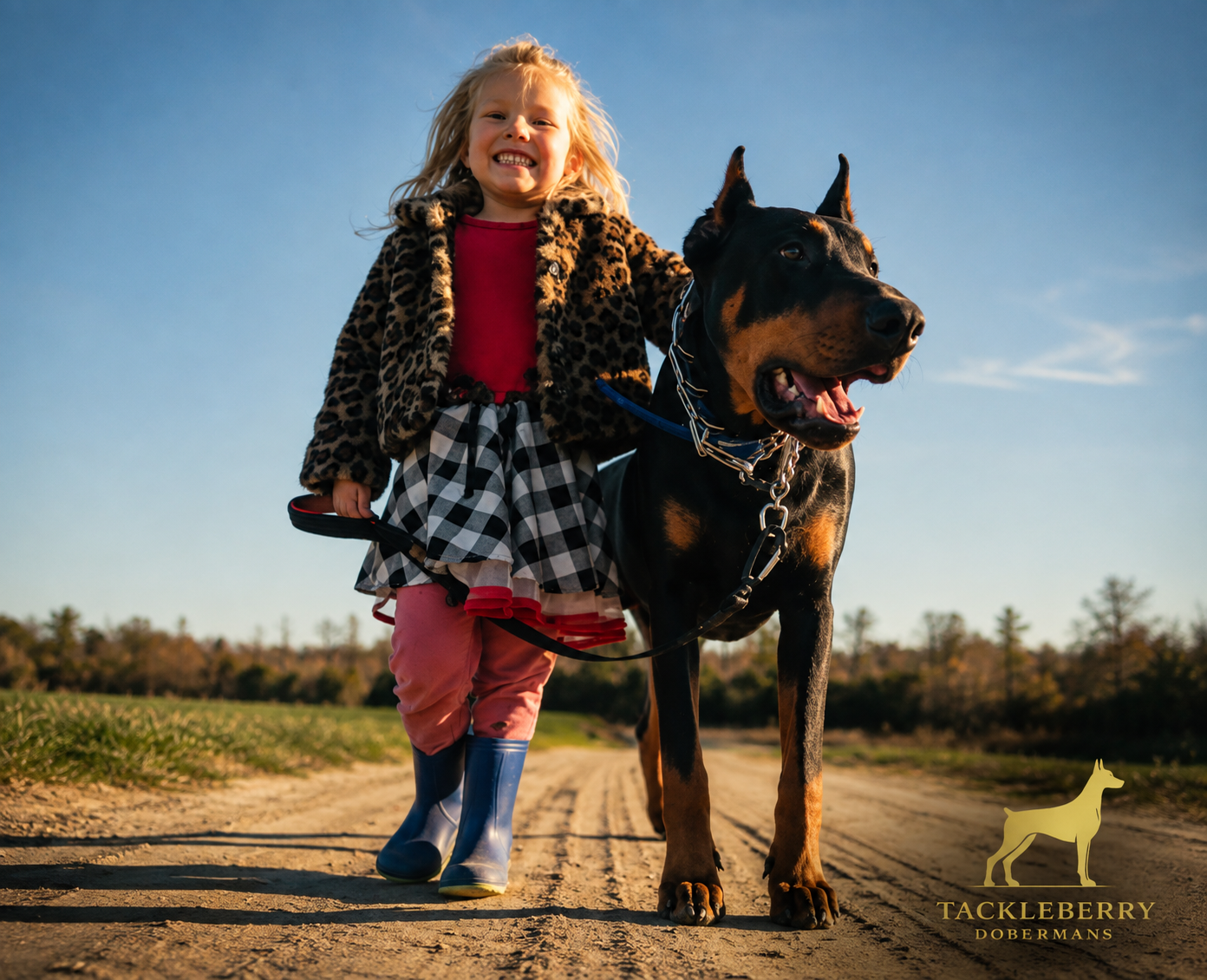
The Protection You May Never Know Happened
This is what makes deterrence so easy to undervalue.
When deterrence works, there may be no story to tell.
You don’t know about the person who considered approaching your property and changed his mind.
You don’t know whether someone noticed your Doberman beside you and decided there was an easier person to bother.
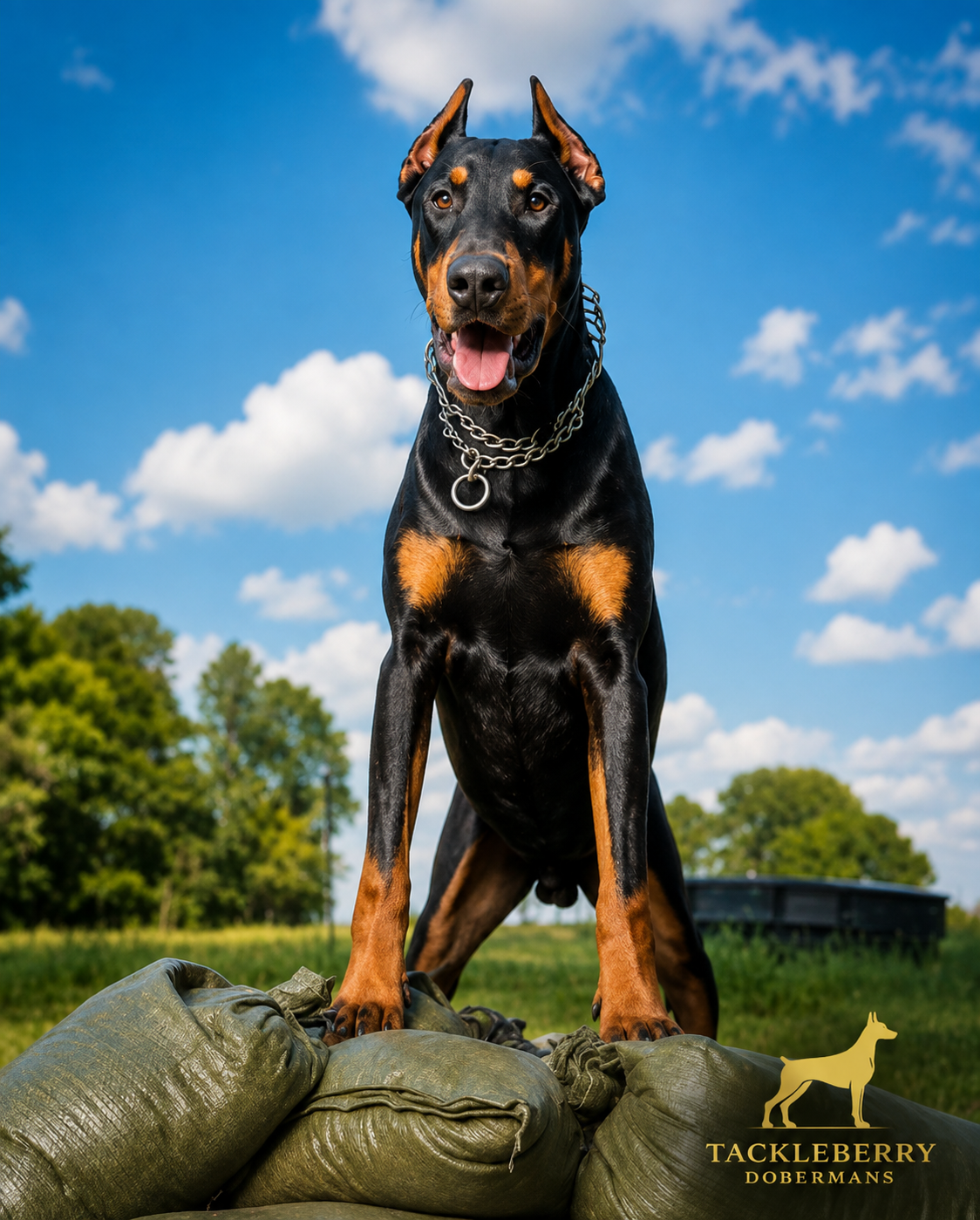
You don’t know which situations might have developed differently if the dog hadn’t been there.
All you know is that nothing happened.
And we tend to measure protection by the events we can see.
A bark is observable.
A confrontation is observable.
Physical engagement is certainly observable.
An avoided confrontation often isn’t.
Yet if the purpose of protection is to help keep you safe, avoiding the confrontation altogether may be one of the most successful outcomes available.
The protection worked before you ever needed to see it.
Protection Doberman: A Deterrent Doesn’t Need to Look Dangerous
There’s an important distinction here.
If the objective is deterrence, it can be tempting to assume that the more intimidating the dog behaves, the more effective he becomes.
A Doberman barking at everyone must look protective.
A dog lunging at the leash must make people think twice.
A dog suspicious of every stranger must be taking his job seriously.
Not necessarily.
There is a tremendous difference between a Doberman who looks capable and a Doberman who looks out of control.
The first can communicate confidence.
The second may be communicating fear, insecurity, frustration, poor handling—or simply a dog that has never learned how to exist calmly around the world.
That distinction matters because the goal isn’t to convince everyone around you that your Doberman is dangerous.
The goal is to develop a dog whose presence carries weight without requiring instability to create it.
A composed Doberman walking quietly beside his handler can make an impression without making a scene.
He doesn’t need to prove anything.
He simply needs to be there.
Further Reading: The Hide and Seek Game That Can Save Your Child’s Life
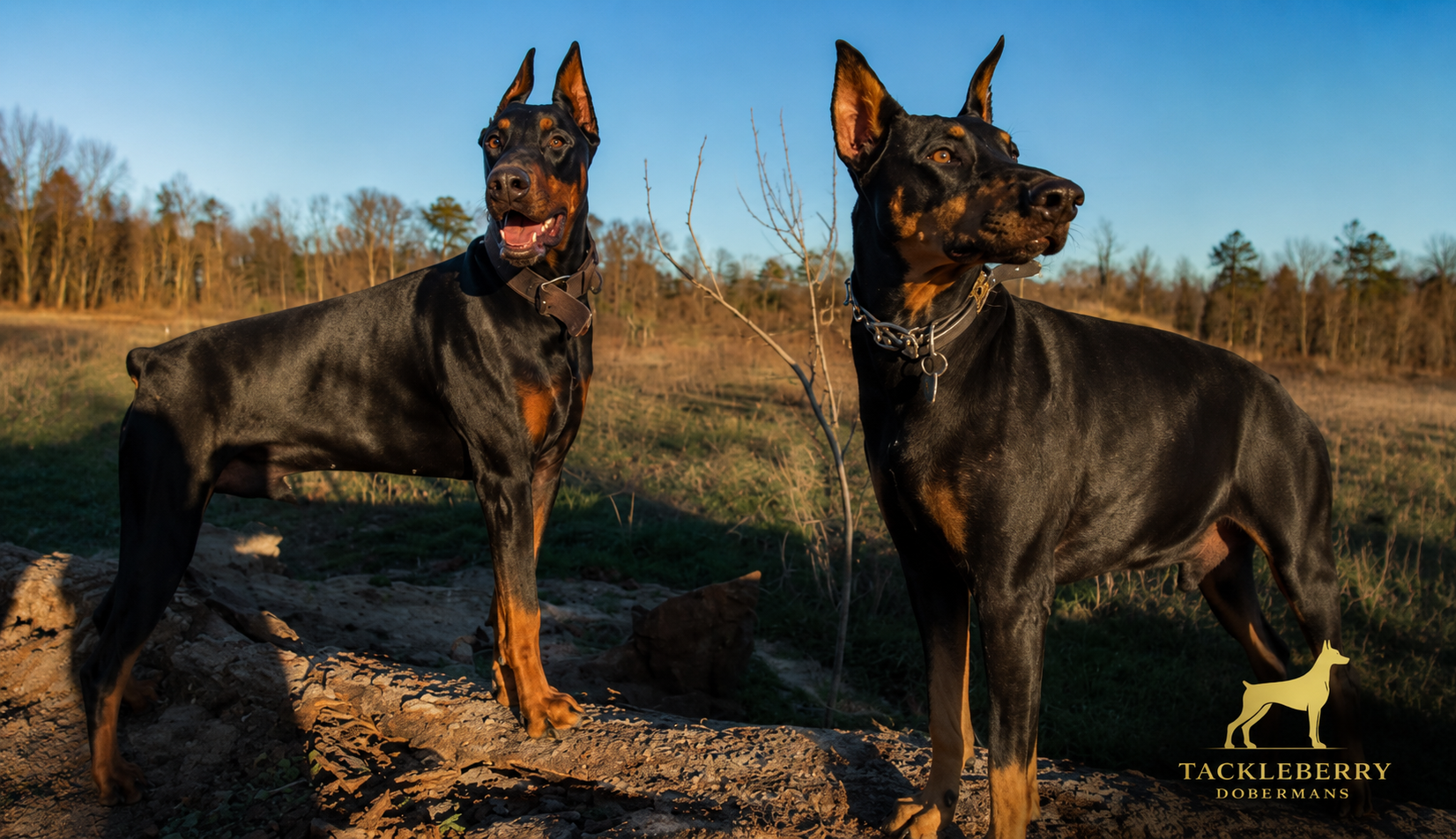
The Doberman Already Has an Advantage
This is one reason the Doberman is uniquely suited to this conversation.
The breed was developed with personal protection in mind, and its physical appearance still communicates something before the individual dog ever takes an action.
The athletic build.
The alert posture.
The unmistakable silhouette.
The tendency to remain aware of what is happening around them.
But appearance alone doesn’t make a protection dog.
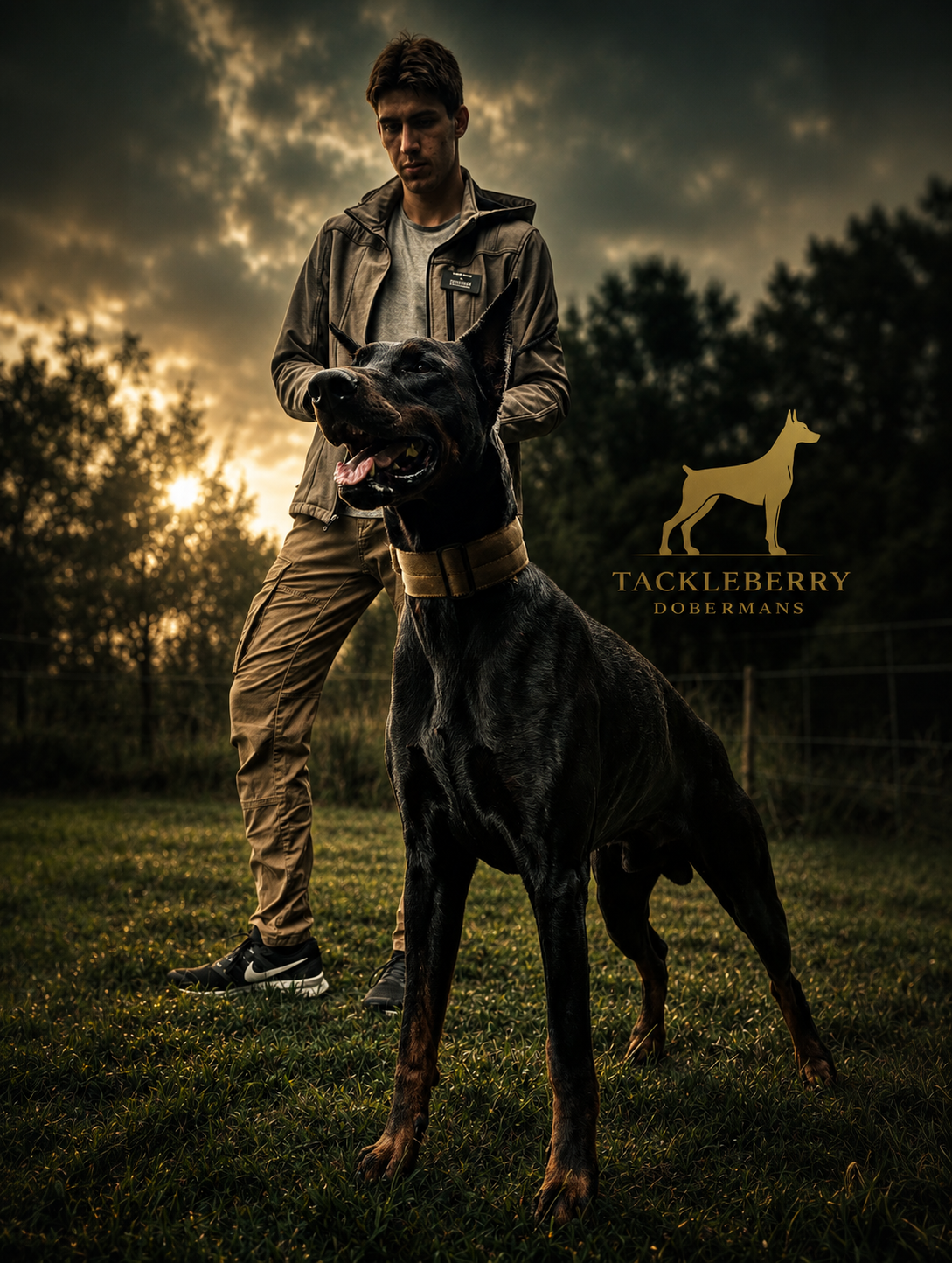
A Doberman can look impressive while lacking confidence. Another can look intimidating while being highly reactive. And a stable, capable dog can be completely neutral toward strangers who pose no concern.
That is why developing a protection Doberman should involve more than trying to make the dog look threatening.
The dog behind the silhouette matters.
Confidence matters.
Environmental stability matters.
Recovery matters.
Obedience matters.
Communication with the handler matters.
The ability to distinguish ordinary life from something that deserves attention matters.
A dog that possesses those qualities doesn’t need unnecessary displays of aggression to create presence.
Further Reading: Cropped Ears or Let Them Hang? The Ear Crop Dilemma
What If Your Friendly Doberman Is Still Doing His Job?
This also challenges another assumption owners sometimes make.
“My Doberman likes people. Will he still protect me?”
It’s an understandable question, but it assumes that friendliness and protective value exist at opposite ends of the same scale.
They don’t have to.
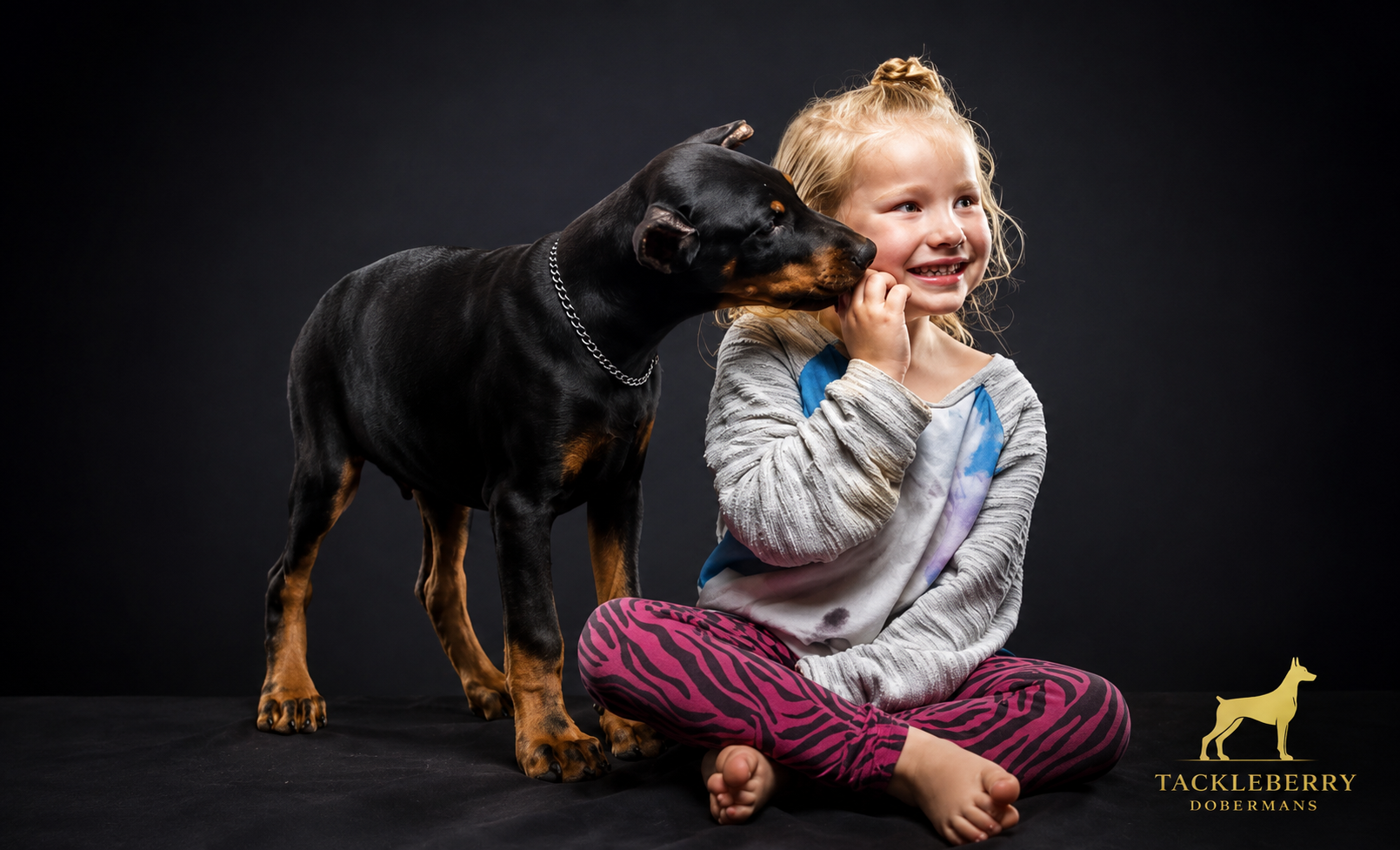
A socially stable Doberman can accept appropriate people and ordinary interactions without losing the physical presence that makes someone notice the dog.
Your Doberman doesn’t need to treat the cashier, your neighbor, your child’s friend, and a potential threat as though they are all the same person.
In fact, a dog that reacts indiscriminately isn’t necessarily demonstrating better protection. He may simply be demonstrating less discernment.
That becomes important as we move deeper into protection development.
You want a dog that manufactures threats in order to look protective.
You want a dog capable of living successfully in ordinary life while contributing something meaningful when circumstances are no longer ordinary.
That is a much higher standard than simply teaching a Doberman to look intimidating.
This Is Where DAD Begins
Within the Tackleberry Academy, this first layer of protection has a name:
DETER.
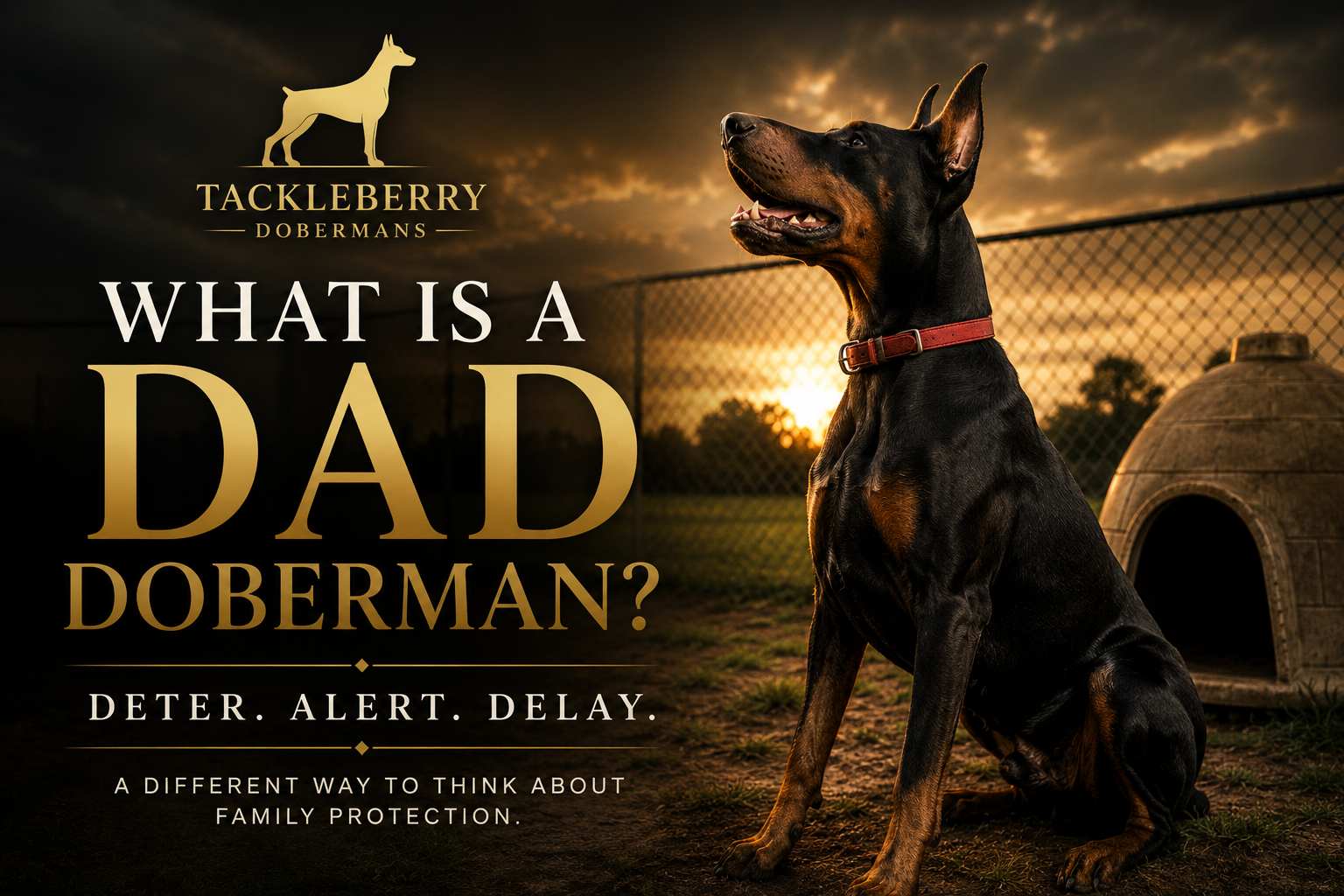
It is the first principle of the DAD Doberman philosophy: Deter. Alert. Delay.
DAD looks at protection as something that can begin long before physical engagement becomes necessary.
Deter asks whether the Doberman’s presence can help prevent an unwanted situation from developing in the first place.
If deterrence doesn’t end the situation, Alert becomes increasingly important: recognizing that something isn’t right and giving you useful information sooner.
And when a threat continues despite those earlier layers, Delay asks another question entirely:
Can my Doberman create time and opportunity for me to act? Will my Doberman protect me?
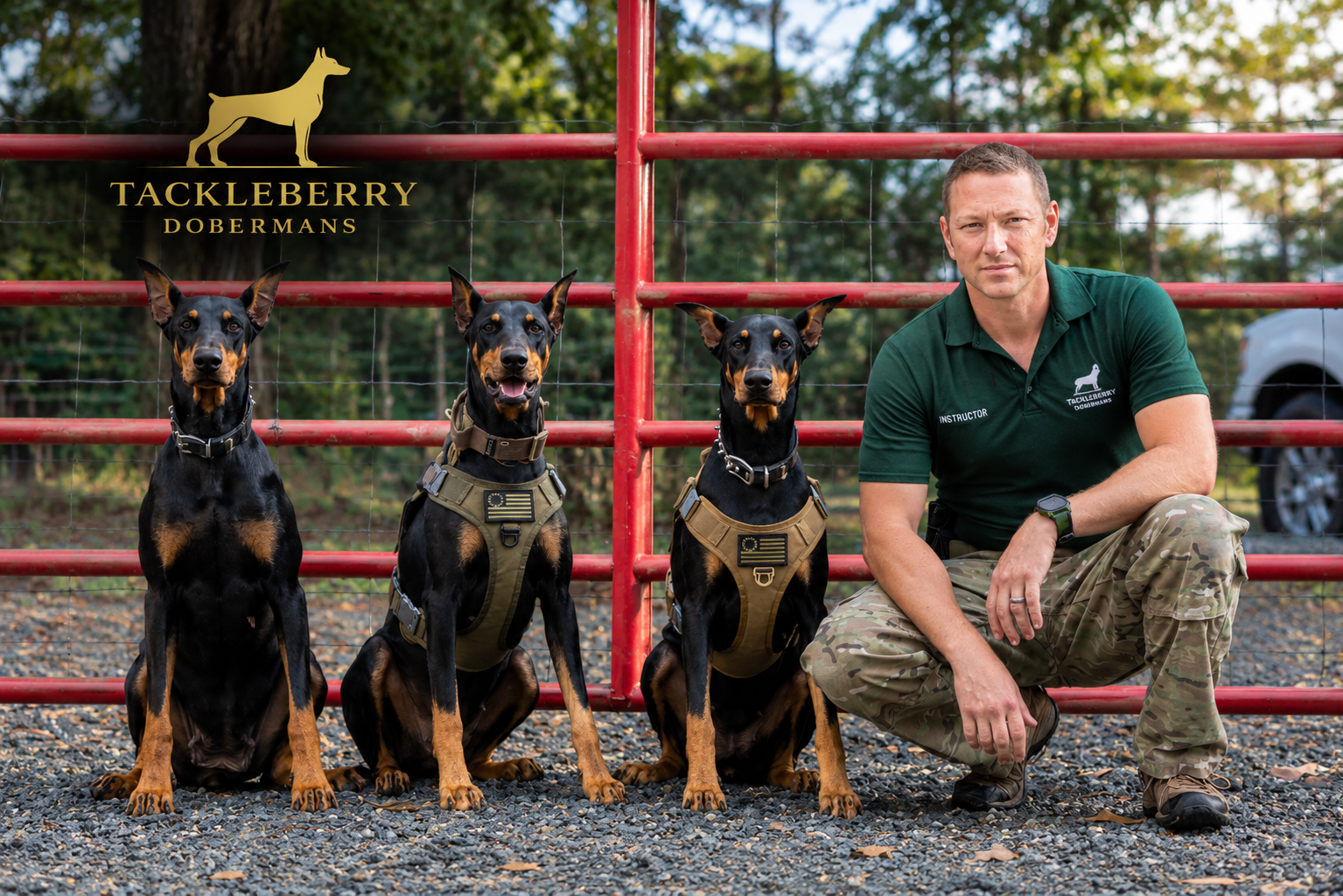
These principles can apply whether someone ultimately chooses the Family or Professional Division of DAD development.
The difference between those paths isn’t whether deterrence matters.
It matters in both.
A professionally developed protection Doberman doesn’t somehow graduate beyond deterrence because physical engagement has become part of his capabilities.
If his presence prevents the confrontation from becoming necessary, that capability hasn’t failed to matter.
It simply wasn’t needed.
Further Reading: What is the best breed for personal protection?
The Goal Isn’t to Prove What Your Doberman Can Do
This may be one of the most important shifts in how we think about protection dogs.
It’s easy to become focused on proving capability.
Would my Doberman bite?
Would he engage someone?
Would he defend me?
Those can be legitimate questions, particularly when evaluating dogs intended for professional protection development.
But there is another question worth asking first:
How much can my Doberman accomplish before any of that becomes necessary?
Because the goal of protection shouldn’t be to reach the most dramatic possible response.
It should be to achieve the safest useful outcome.
Sometimes that may require intervention.
Sometimes it may require an alert.
Sometimes it may require the dog to help create enough time for you to respond.
And sometimes—
the best outcome is that your Doberman never has to do anything at all.
Someone sees the dog.
Someone makes a different decision.
You continue walking.
Nothing happens.
No heroic story.
No dramatic confrontation.
No proof.
Just you, your Doberman, and an ordinary day that stays ordinary.
And perhaps we’ve been measuring that outcome incorrectly.
Because when it comes to a protection Doberman, nothing happening doesn’t necessarily mean nothing happened.
Sometimes it means the first part of the job worked.
DETER.
The protection that happens before anything happens.