
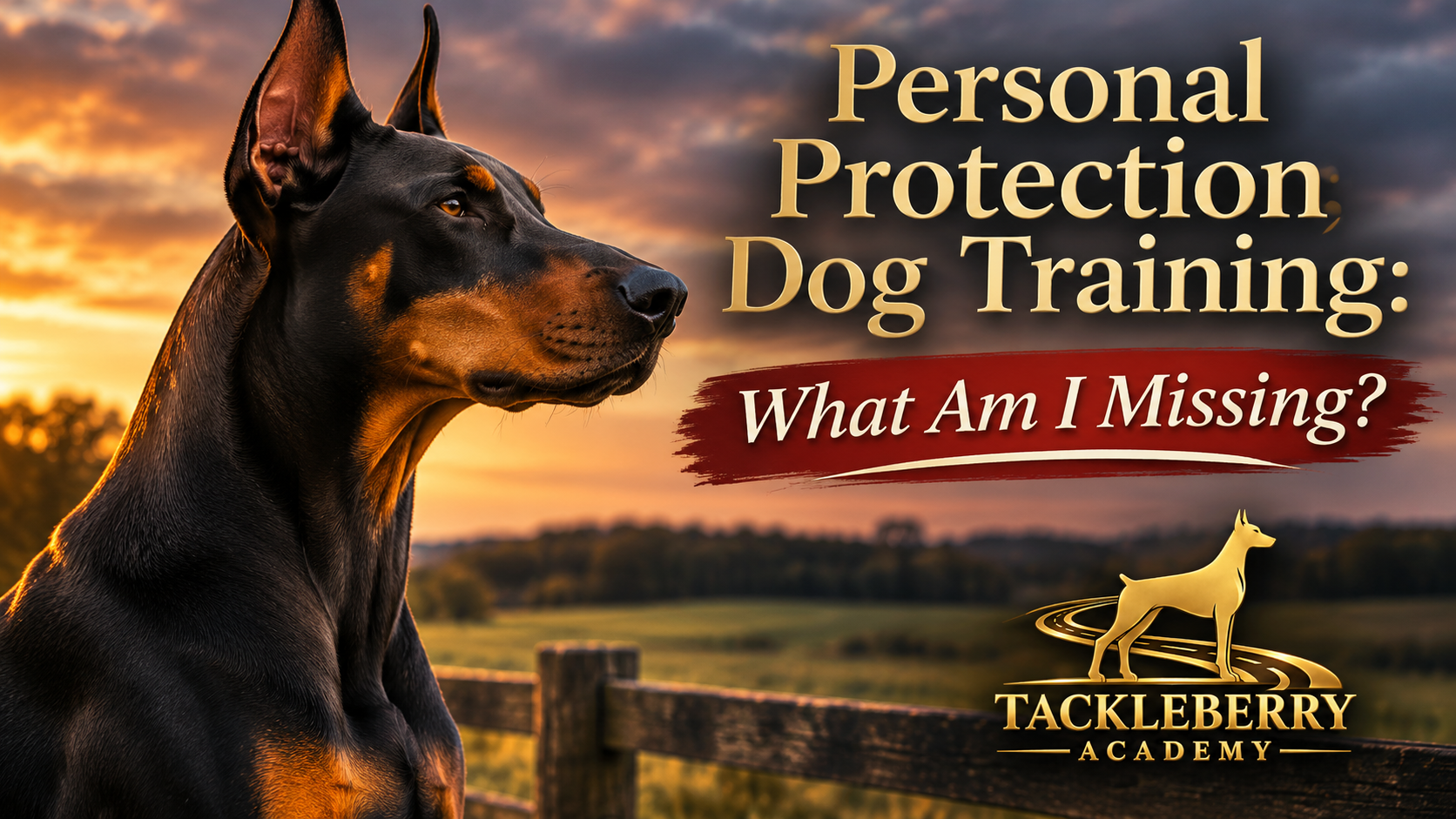

What happens when the dog you trust to protect you becomes the one you're worried about controlling?
Or when thousands of dollars in personal protection dog training produce an impressive performance, but leave you wondering how those skills would hold up against real danger?
It's enough to raise a question worth asking before making that investment: Am I missing something?
There's a difference between a dog that knows how to bite and one that's been prepared for the responsibilities of protection.
And somewhere between real-world capability and everyday comfort is the kind of protection most people are actually looking for.
Because real protection should bring greater peace of mind, not another reason to worry.
And perhaps there is something missing from the picture. Just not what you might expect.
Have we met?
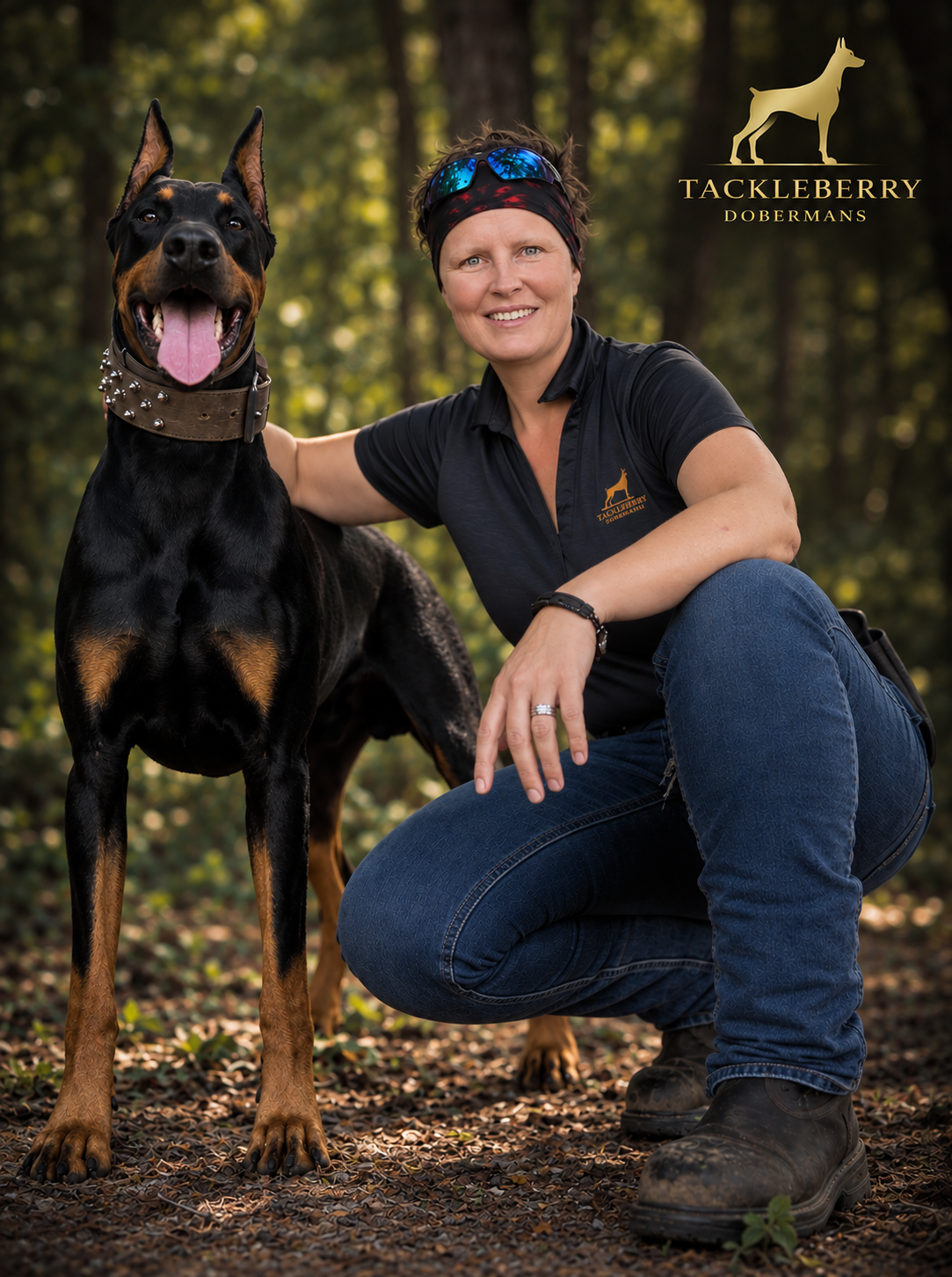
Hello, I'm Amy Arthur, founder of the Tackleberry Alliance.
My work within the K9 world is built around a simple belief: exceptional dogs deserve equally capable people beside them. Through education, development, and meaningful standards of achievement, I create practical frameworks that help you better understand the dog you're working with and discover what you're capable of accomplishing together.
Through my breeding program, the Tackleberry Alliance, and the Tackleberry Academy, you'll find the guidance, resources, and opportunities to take that partnership farther.
You bring the ambition. I'll help you build the path forward.
Not a decision to take lightly
Consider everything that happens before actual protection is needed. The unfamiliar person approaching. The unexpected noise. The visitor who means no harm. The situation that feels uncomfortable but never becomes dangerous.
How should a protection dog respond to each of those moments?
And what happens when a dog reacts too quickly, too intensely, or fails to respond when its presence could have made a difference?
These aren't small considerations when you're sharing your home, your family, and your everyday routines with that dog.
A dog that's constantly suspicious can make ordinary interactions exhausting. A dog that responds unpredictably can become a liability. And a dog whose training depends entirely on familiar exercises may leave you questioning what you've actually invested in.
The concern isn't whether a protection dog should know how to bite.
It's whether the dog has been prepared for everything that comes before—and after—that decision.
Perhaps that's where personal protection dog training becomes especially interesting. Not just in what a dog is capable of doing when danger appears, but in how comfortably and confidently that same dog can navigate the moments when it doesn't.
Because when personal protection becomes part of your everyday life, the quality of that training affects far more than what happens during an emergency.
So what's the missing piece that brings serious protection and everyday peace of mind together?
A Different Angle
What if the protection you're looking for isn't quite what you had in mind?
Not because your expectations are too high. But because serious protection may involve more than the moments you've imagined needing it most. And not in the way most picture that protection to play out when the rubber meets the road.
Consider the value of a dog whose presence can discourage a potential threat before anything happens. One that recognizes something unusual and alerts you while there's still time to respond. And one whose training can help create precious seconds when a dangerous situation begins to unfold.
None of those capabilities diminishes the importance of what a protection dog may be called upon to do when danger becomes unavoidable.
Instead, they expand the possibilities.
That's the thinking behind DAD: Deter. Alert. Delay. But there is more to it than just that.
Putting the Pieces Together
What if the protection you're looking for isn't quite what you had in mind?
When most people imagine a personal protection dog, their thoughts naturally turn to what the dog might do when danger appears.
But there's another question worth considering.
What happens when a true threat comes knocking? When your dog steps in to protect you, they're holding off the danger. But now what?
Perhaps the missing piece isn't another protective capability at all.
A protection dog's role is much more meaningful than one short moment of combat: their true and often overlooked design is helping create opportunities that might not otherwise exist.
And that changes how personal protection dog training can be understood.
Protection Dog Training: Should Your Dog Be Suspicious of Strangers?
DAD: Deter. Alert. Delay.
Critically, a protection dog's true role isn't to end the entire confrontation, wrap up the threat with a Christmas bow and place it on the curb for disposal. His sole purpose falls within three protective functions. With one underlying purpose: to give you time when it matters most.
Deter: Time Before Trouble Begins
A dog's presence can discourage an unwanted approach before a confrontation ever develops in the first place. But this doesn't just come from a dog simply being there. They must have the right mindset and accompanying demeanor to send the right message.
Likewise, confidence, composure, and attentive behavior can contribute to that deterrent presence without requiring the dog to treat every unfamiliar person as a threat.
Sometimes, the most valuable seconds are the ones gained because a confrontation never begins.
Deter: What If Your Protection Doberman Doesn't Have to Do Anything?
Alert: Time to Recognize and Respond
An appropriate alert can bring an unusual situation to your attention before you might otherwise notice it.
Not every unfamiliar sound or movement signals danger. A stable dog can remain comfortable in ordinary situations while communicating when something deserves attention because they've actually been taught what they really need to look out for. And it certainly shouldn't come from the neighbor's direction simply because he sneezes wrong.
The right awareness may give you valuable time to understand what's happening and decide how to respond.
Alert: Doberman Instincts: Should You Trust What Your Dog Tells You?
Delay: Time When Danger Doesn't Stop
Deterrence doesn't always prevent a threat. And an alert doesn't always provide the right notice or bring the danger to an end.
That's where Delay takes on its most serious meaning and your dog can step in to slow down the threat. But don't shortchange your security plan by expecting that to take the entire risk out of the picture.
It's dangerous to expect your protection dog training to solve all of your problems. Yet, when used correctly, can be a life-saving, game-changing component within your domain and it all boils down to one thing: time.
Serious Canine Protection
More than Just a Bodyguard
Choose Your Advantage
Serious Protection. Everyday Confidence.
Imagine having confidence in your dog's protective capabilities without questioning how they'll behave when friends visit, children are playing, or you're simply enjoying an ordinary afternoon together.
A dog that remains composed when life is peaceful, attentive when circumstances change, and capable of responding appropriately when a genuine threat emerges.
You shouldn't have to choose between meaningful protection and a dog you're comfortable living with.
And there's another advantage worth considering.
Your dog's protective value isn't limited to the moment danger becomes unavoidable. It can begin before a confrontation develops, continue when a threat demands a response, and make a meaningful difference in what happens next.
That's the bigger picture behind Deter. Alert. Delay.
Because your dog's role isn't to resolve every threat or take responsibility for everything that follows.
It's to give you something you may need more than anything else in a dangerous moment: time.
Time to recognize what's happening. Time to make decisions. Time to respond.
Whether you pursue professional personal protection dog training or take an active role in developing your own dog, that understanding can help you make more of its protective potential without sacrificing everyday confidence.
Serious protection isn't just about what your dog can do when danger strikes. It's about the value your dog brings to your life before, during, and beyond that moment.
The question is: How would you like to develop that partnership?
Frequently Asked Questions About Personal Protection Dog Training
Will personal protection training make my dog aggressive?
Proper protection training should develop controlled responses, not generalized aggression. A dog that becomes suspicious, reactive, or unpredictable around ordinary people and situations may create more problems than protection. Temperament, training methods, and handler control all matter.
Can I trust a protection-trained dog around my children and visitors?
A well-suited, appropriately trained protection dog can be a stable family companion. However, protective capability alone doesn't establish that a dog is safe around children or visitors. Temperament, upbringing, social stability, reliable control, and supervision remain essential. The goal is a dog that can distinguish ordinary situations from circumstances requiring a protective response.
How do I know whether my dog is suitable for personal protection training?
Proper temperament and intelligence evaluations for protection dog training is a vital first step. Confidence, emotional stability, environmental resilience, and the ability to respond reliably to you are important considerations. A qualified evaluation can help determine which protective capabilities are realistic for your individual dog. If you're looking to understand the process more, you can use the methods within the Academy to help you determine training potential.
Will my dog actually protect me in a real emergency?
Meaningful protection involves more than rehearsed exercises. Deterrence, appropriate alerting, reliable control, and the ability to create valuable response time all contribute to a dog's protective role. Training demonstrations can show what a dog has learned, but they cannot guarantee how that dog will respond in an unpredictable emergency. The true question here isn't, "Will a protection dog solve all my worries?" but closer to, "Will it make enough of an impact that it enables me to gain the upper hand?"